Most HubSpot portals are set up for a simple sale. One buyer fills out a form, a rep follows up, and the deal closes in a few weeks.
Healthcare doesn’t buy that way. A single deal can run most of a year and involve a CIO, a CFO, clinical leaders, IT security, and procurement. Each of them has a different question, and any one of them can stall the deal.
When HubSpot isn’t set up for that reality, your team ends up managing its most important deals from memory and spreadsheets. Here’s how to fix that.
In short: Healthcare deals have a lot of decision makers, so HubSpot needs to keep track of all of them. Start by adding everyone on the buying committee to the deal and labeling the role each person plays. From there, set up deal stages that match how healthcare actually buys, give each role the content it cares about, and let workflows warn you when a deal goes quiet.
Why default HubSpot setups fall short in healthcare
In the portals we review, the same four gaps show up again and again:
- One contact per deal. The person who filled out the form is attached to the deal. Everyone else on the buying committee is invisible.
- Stages built for speed. Generic stages like “qualified” and “proposal” hide where long deals actually stall.
- Nurture by persona, not by role in the deal. A CFO evaluating your product needs different content than a CFO who downloaded an ebook.
- No signal when a deal goes quiet. In a long cycle, a few silent weeks can be normal or a warning. Without alerts, nobody knows which.
How to map the buying committee in HubSpot
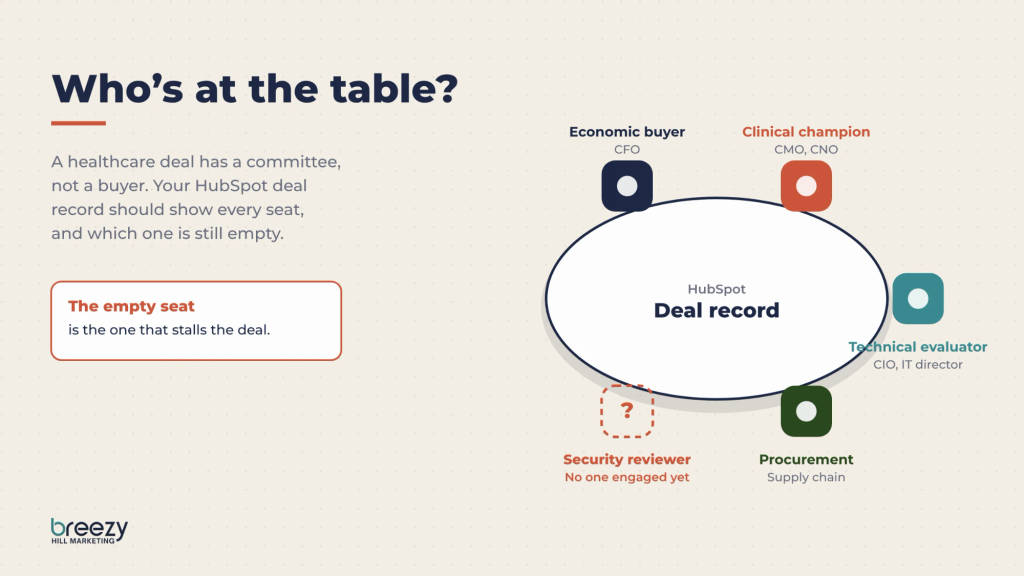
A buying committee is the group of people who must approve a purchase before a healthcare organization signs. In HubSpot, each of them should be a contact associated with the deal. Gartner’s research on the B2B buying journey shows these groups rarely move through a decision in a straight line.
Start by associating every known decision maker with the deal record, not just the original lead. Then label what each person does in the decision. HubSpot’s buying role property and deal association labels both work for this; pick one and use it consistently.
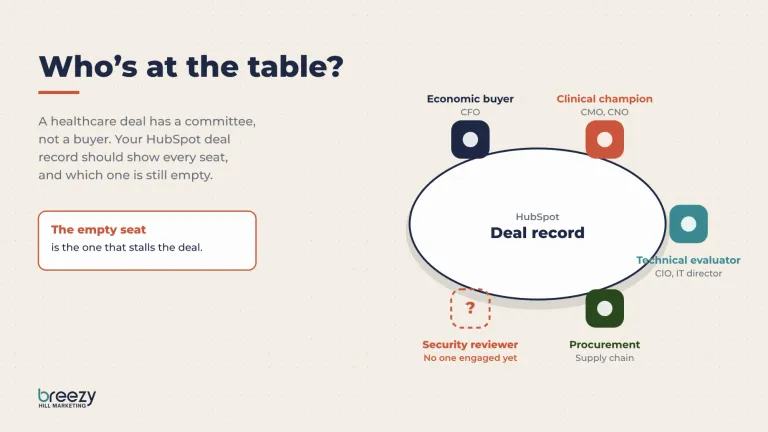
A simple set of roles covers most healthcare deals: economic buyer, clinical champion, technical evaluator, security reviewer, and procurement. Once those are in place, you can see at a glance which deals are missing a key voice.
| Buying role | Typical titles | What they need to see | Content to send |
| Economic buyer | CFO, VP of Finance | Financial return and budget fit | ROI model, business case |
| Clinical champion | CMO, CNO, department chief | Evidence it improves care or clinical workflow | Clinical evidence, peer stories |
| Technical evaluator | CIO, IT director | How it integrates with the EHR and existing systems | Integration documentation, technical overview |
| Security reviewer | CISO, IT security lead | HIPAA compliance and data protection | Security documentation, completed questionnaires |
| Procurement | Supply chain, contracting | Pricing, terms, and vendor requirements | Pricing summary, contract terms, vendor forms |
How to build HubSpot deal stages for healthcare sales
Your HubSpot deal stages should match the real milestones a healthcare buyer moves through. For many companies selling into health systems, that looks something like this:
- Discovery
- Clinical or operational validation
- Business case
- Security and compliance review
- Contracting and procurement
- Closed
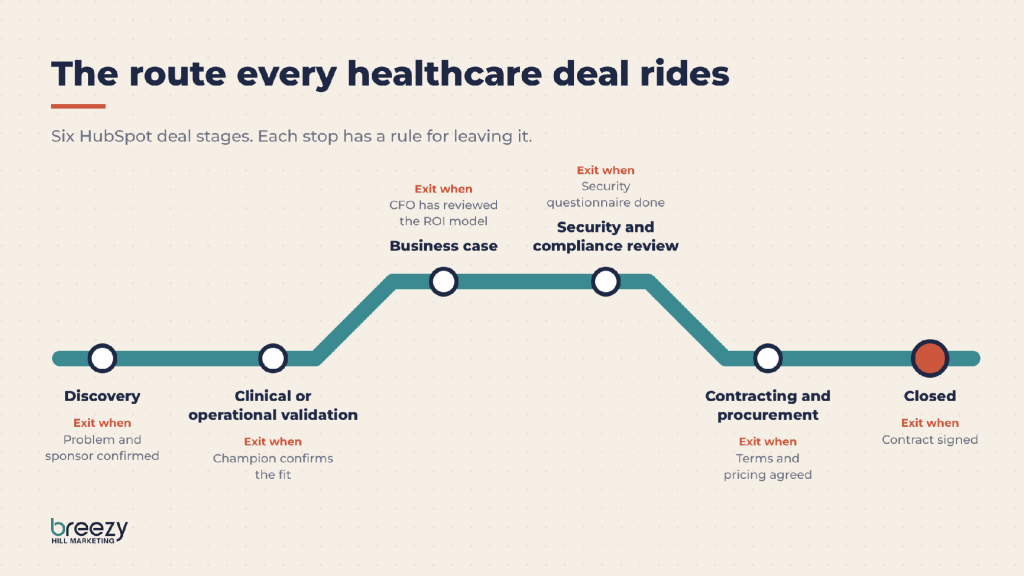
Give each stage clear exit criteria, so reps move deals forward based on what happened, not how they feel. Then stage duration reports will show you exactly where deals slow down.
How to nurture each buying role, not just each persona
Once committee roles live in HubSpot, your nurture can follow them. The CFO gets the ROI model and the business case. The CIO gets integration and security documentation. The clinical champion gets evidence and peer stories.
This is where marketing earns its place in late stage deals. Instead of stopping at the MQL, your programs keep every decision maker informed while sales runs the process.
How to flag stalled deals with HubSpot workflows
Set up workflows that flag a deal when there has been no meaningful activity for a set period, such as three weeks. Create a task for the rep, and let marketing know so they can reach the rest of the committee with the right content. In HubSpot, build this as a deal-based workflow that enrolls open deals when the last activity date is more than 21 days ago.
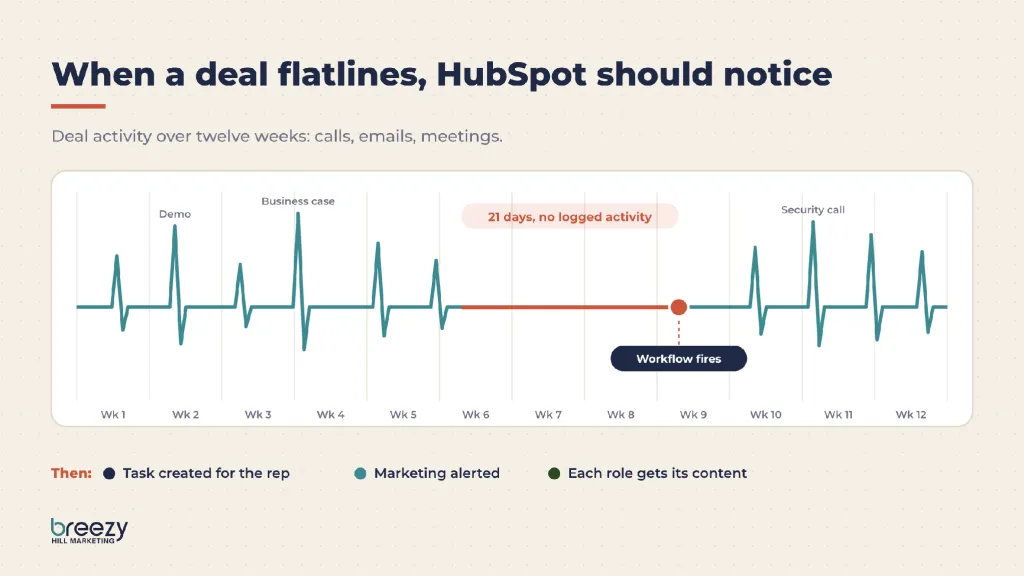
Also alert the rep when a new contact from the account engages with your content. That is often the first sign a new voice has joined the decision.
HubSpot reports that show buying committee engagement
With roles and stages in place, a few reports become possible that most teams have never seen:
- Deals by number of engaged buying roles
- Average time in each stage, by deal size
- Win rate by how many roles were engaged before the business case stage
These reports show leadership why deals stall, and show marketing where it can help.
Frequently asked questions
How long is a healthcare sales cycle?
Deals with hospitals and health systems often run most of a year, and longer when security review and procurement are involved. Each person on the buying committee adds a review step, so the cycle grows with the number of decision makers.
Who is on a healthcare buying committee?
Most committees include an economic buyer such as the CFO, a clinical champion, a technical evaluator from IT, a security reviewer, and procurement. Larger health systems may add legal, compliance, and department leaders. Many also route new purchases through a value analysis committee that weighs clinical benefit against cost.
Should I use the buying role property or deal association labels in HubSpot?
Buying role is a contact property, so it describes the person on every deal they touch. Deal association labels describe a person’s role on one specific deal, which fits better when the same contact plays different roles on different deals. Either works if your team uses one consistently.
What deal stages work for selling to health systems?
A common pipeline is discovery, clinical or operational validation, business case, security and compliance review, contracting and procurement, and closed. Each stage should have exit criteria based on what the buyer has done, such as completing a security questionnaire.
How do I know when a long healthcare deal has stalled?
Use a HubSpot workflow that flags open deals with no logged activity for a set period, such as three weeks, and creates a task for the rep. Compare each deal’s time in stage to your average for that stage to tell a normal pause from a real stall.
Get a free HubSpot audit
If your deals are long and your HubSpot setup still assumes they’re short, you’re not alone. Most healthcare companies we work with started there.
Breezy Hill Marketing will review your HubSpot portal at no cost and show you how to map buying committees, rebuild your stages, and set up the alerts and reports that keep long deals moving. Your team keeps the process; we help you build it.

Want help putting this to work?
We work alongside healthcare marketing teams. Discovery calls take 30 minutes.