Key takeaway: Buyers and investors want proof that growth is repeatable. For a healthcare company preparing for a funding round or sale, that proof comes from six marketing systems: a consistently used CRM, defined funnel stages, source and influence reporting, a defensible customer acquisition cost (CAC), documented programs, and customer retention data. Most companies need 6 to 12 months to build these systems with enough clean history to hold up in diligence.
Why does marketing matter in diligence?
Marketing matters in diligence because it’s where buyers and investors verify that revenue is repeatable. When a healthcare company prepares for a raise or a sale, most preparation focuses on financials, contracts, and the product. Marketing gets less attention until diligence begins and someone asks: “Show us how you generate revenue.”
Buyers want to see that new customers come from a system, not from a founder’s personal network or a few lucky deals. Your marketing and sales infrastructure is where that proof lives. Private equity buyers increasingly review go-to-market capability alongside the financials, as Bain’s Global Private Equity Report describes.
A company with clean data and clear reporting can show where revenue comes from, what it costs to acquire a customer, and how the pipeline supports future growth. That makes the growth story easier to believe and easier to value. A company without those systems has to reconstruct the story from spreadsheets and memory. Even if the business is strong, the uncertainty raises questions, and questions in diligence rarely help valuation.
What marketing systems do buyers and investors look for?
Commercial diligence teams evaluate a target’s go-to-market model before committing to a deal. Most reviews look for six marketing systems:
- A real CRM used consistently. One system of record for contacts, companies, and deals, with sales and marketing both working in it.
- Defined funnel stages. Clear definitions for lead, qualified lead, opportunity, and customer, applied the same way over time.
- Source and influence reporting. Evidence of which channels and programs produce pipeline and revenue.
- Customer acquisition cost (CAC). A defensible number based on actual spend and actual results.
- Documented, repeatable programs. Campaigns and processes that would keep running if any one person left.
- Customer retention data. For healthcare technology companies, renewal and expansion data matters as much as new logos.

Six marketing systems buyers review
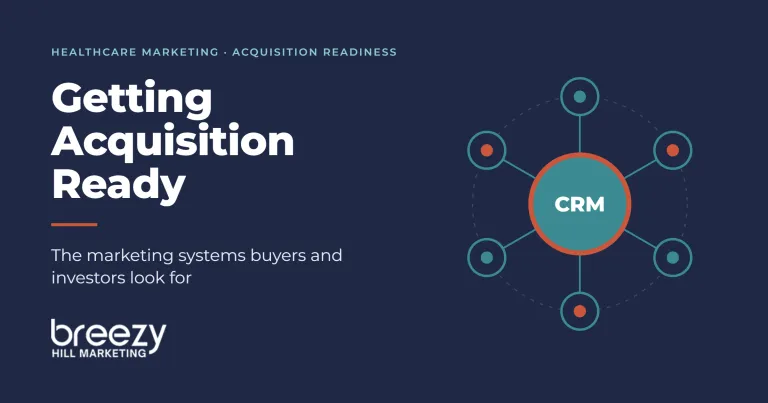
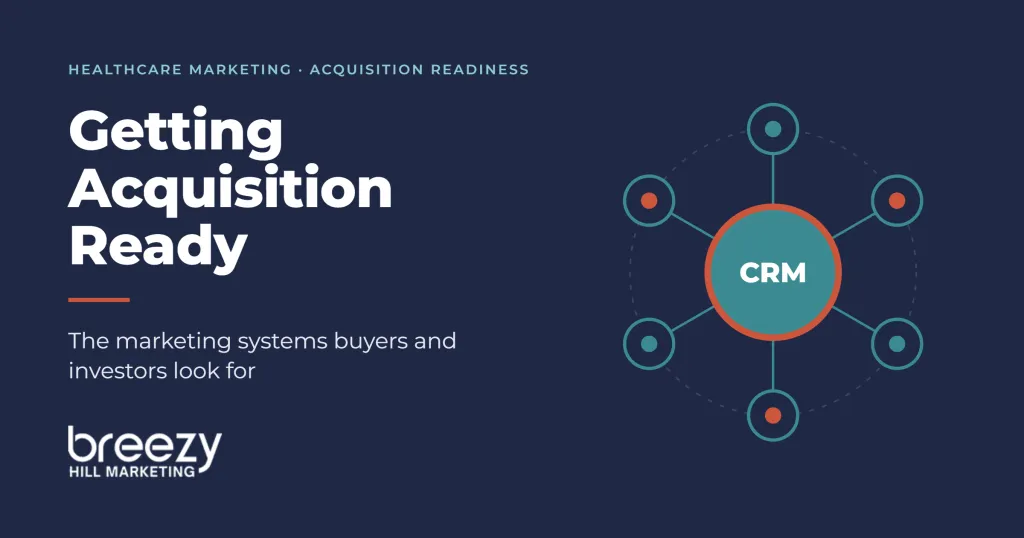
The CRM is the system of record behind every other answer buyers look for. If it isn’t used consistently, the rest can’t be verified.
| System | Diligence-ready | Not ready |
| CRM | One system of record used by sales and marketing | Pipeline in spreadsheets or personal inboxes |
| Funnel stages | Written definitions applied consistently for 12+ months | Definitions that change yearly or vary by rep |
| Attribution | Reports tie channels and programs to pipeline and revenue | No one can say which programs drive revenue |
| CAC | Calculated from actual spend and closed deals | Estimated or unavailable |
| Programs | Documented and run by a team | Dependent on one person |
| Retention | Renewal and expansion tracked by account | New logos only |
What are the biggest marketing red flags in diligence?
The four most common marketing red flags in diligence are:
- Spreadsheets instead of a CRM. Pipeline tracked in a spreadsheet is hard to verify and impossible to audit.
- Unclear attribution. If nobody can say which programs produce revenue, a buyer will assume marketing spend is unproven.
- Growth that depends on one person. When most deals trace back to a founder or a single sales leader, buyers see key-person risk.
- Inconsistent history. Lifecycle definitions that change every year make trends impossible to read.

Diligence red flags and their fixes
Each red flag maps to a fix that can start well before a buyer or investor asks.
How long does it take to become acquisition ready?
Becoming acquisition ready takes 6 to 12 months for most healthcare companies. The systems themselves can be set up in a few months, but buyers want clean history behind them, and that history takes time to accumulate. A practical plan:
- Months 1–2: Foundation. Choose or confirm the CRM, migrate if needed, and clean the data. If there’s no CRM in place, implement one.
- Months 2–4: Definitions and reporting. Set lifecycle and deal stages, configure attribution, and build leadership dashboards.
- Months 4–12: Proof. Run documented, measurable programs and let the data build a track record.

6 to 12 month readiness plan · 3 phases
Setup takes about four months; the rest of the year builds the clean history buyers want to see.
The earlier you start, the more history you’ll have to show.
How can an outside marketing team help prepare for a raise or sale?
An outside team builds the systems while your internal team keeps executing. Most healthcare marketing teams preparing for a raise or a sale are already at capacity: running the current plan, supporting sales, and often helping with the transaction itself.
Breezy Hill Marketing works alongside your team to put the CRM foundation, data, processes, and full-funnel reporting in place. You keep ownership of the strategy. We make sure the systems behind it stand up to scrutiny.
Frequently asked questions
What does “acquisition ready” mean for marketing?
Acquisition-ready marketing means a company can show, with data from its own systems, where revenue comes from, what it costs to acquire a customer, and how the pipeline supports future growth, without relying on spreadsheets or any one person’s memory.
What makes customer acquisition cost “defensible”?
CAC is total sales and marketing spend in a period divided by the number of new customers acquired in that period (HubSpot’s CAC guide walks through the formula). It’s defensible when the spend ties to financial records and the customer count ties to closed deals in the CRM.
Can we use spreadsheets instead of a CRM for diligence?
Not reliably. Spreadsheet pipelines are hard to verify, can’t be audited, and lack the change history buyers use to confirm that the numbers are real.
Why does retention data matter for healthcare technology companies?
Healthcare technology revenue often depends on renewals and expansion within existing accounts. Buyers weigh retention as heavily as new customer growth because it shows the revenue base is durable. McKinsey research found that B2B tech companies with best-in-class net revenue retention consistently earn higher valuations.
When should we start preparing?
Start at least 6 to 12 months before a planned raise or sale. If the transaction is one to two years out, start now to build the longest possible clean data history.
If you’re planning a raise or a sale in the next year or two, start with a free HubSpot audit, or take a deeper look with our Pipeline Reality Diagnostic.
Request your free HubSpot audit · Learn about the Pipeline Reality Diagnostic

Want help putting this to work?
We work alongside healthcare marketing teams. Discovery calls take 30 minutes.