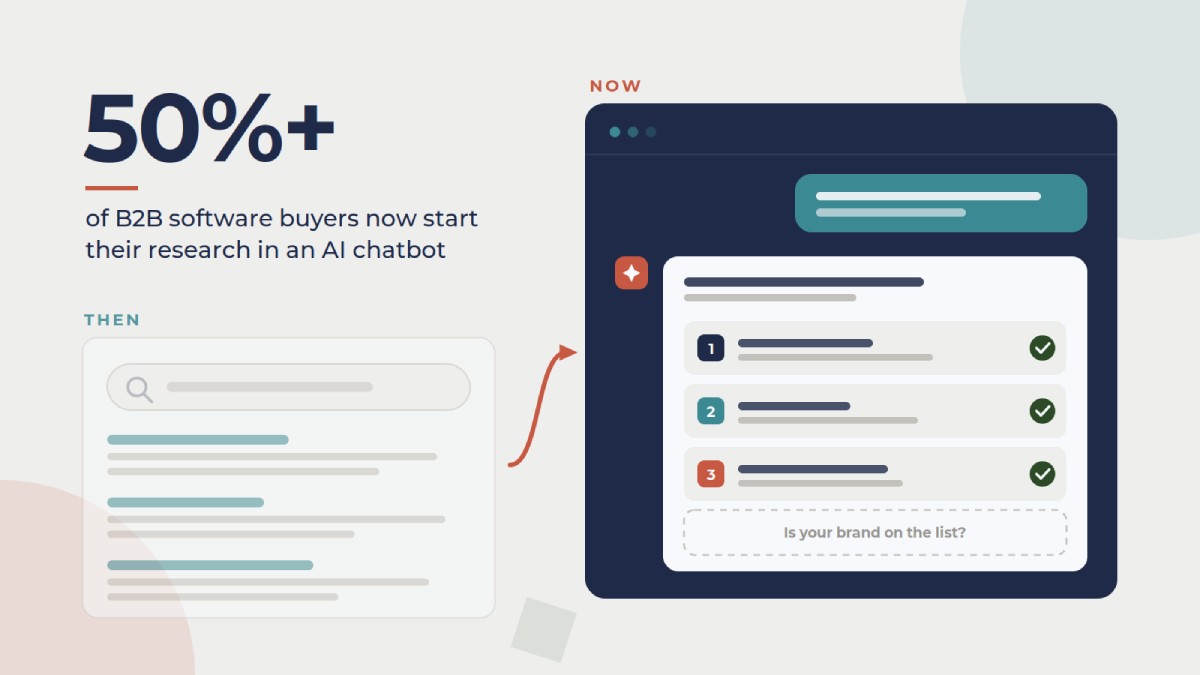
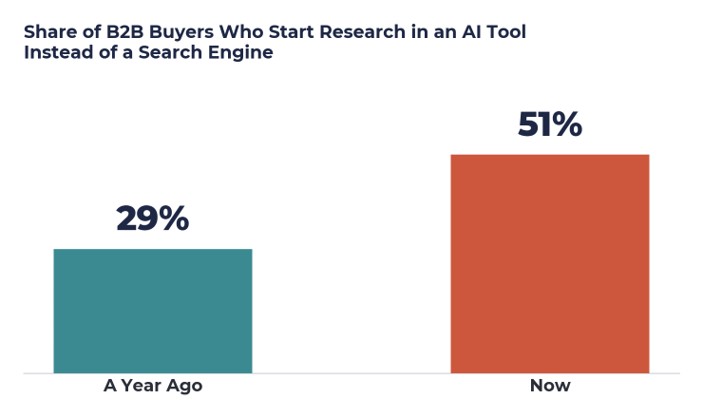
A year ago, about 29% of B2B software buyers said they started their research inside an AI chatbot instead of a search engine. Now that number is past 50%. That’s not a slow trend line creeping upward. That’s a shift that happened in about twelve months, and most funnels haven’t caught up to it yet.
The classic B2B funnel assumes a buyer’s first move is a Google search, landing on a page you control, then working through your content at their own pace. That’s no longer the starting point for a growing share of buyers. Instead, they’re opening ChatGPT or Perplexity, asking something like “what’s the best project management tool for a 50 person agency,” and getting a synthesized answer that names two or three vendors. If you’re not one of them, you don’t just rank lower. You’re not in the conversation at all.
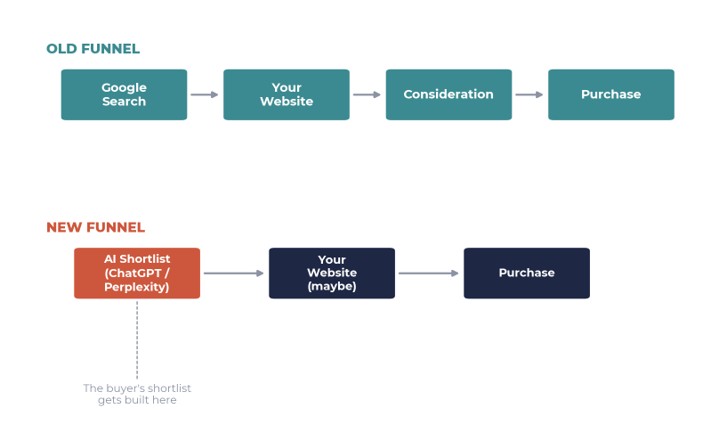
This means a chunk of your funnel now happens somewhere you can’t track and can’t retarget. The buyer has already formed an opinion about who’s worth talking to before your website analytics even register a visit.
Clicks Aren’t the First Signal Anymore
Marketing teams have spent years optimizing for clicks: better titles, better meta descriptions, better calls to action. Those still matter for buyers who click through. But when a buyer never clicks because the AI already gave them a shortlist, click-through rate stops being a useful early indicator.
What matters now is whether you show up in that shortlist in the first place, which depends less on keyword rankings and more on whether AI systems recognize your brand as a credible, well-defined answer to the question being asked.
What Actually Changes in Practice
This doesn’t mean throwing out your SEO work. Most AI citations still lean on pages that already rank reasonably well organically, so weak fundamentals will hurt you in both places at once. Here’s where to actually put your time:
Six Things To Do This Quarter
- Run the shortlist test this week. Ask ChatGPT, Perplexity, and Google AI Overview “what’s the best [your category] for [your ICP]” and “how does [your company] compare to [top competitor].” Note who gets named. That’s your starting point.
- Turn explainer pages into comparison pages. Pick your five highest-traffic pages and add a section naming alternatives directly, with real trade-offs: price tiers, team size fit, integration depth, support model.
- Clean up your entity profile everywhere it lives. Line up your About page, G2 or Capterra listing, Crunchbase profile, and LinkedIn page. Make sure the company description and category language match word for word.
- Add basic schema markup. Organization and Article schema on key pages give AI crawlers a structured, unambiguous read on who you are.
- Confirm AI crawlers can reach your site. Check robots.txt and make sure you’re not accidentally blocking GPTBot or PerplexityBot.
- Track citations monthly, not just rankings. Rerun the shortlist test and log who got named and cited. It’s the closest thing to a leading indicator you have.
The Bigger Point
This isn’t about chasing a new platform. It’s about accepting that part of the buyer’s decision now happens outside your website, and building content and brand signals that hold up there too. Teams that treat this as an extension of their existing marketing work, not a separate project for later, are the ones showing up in AI-generated shortlists right now. Everyone else is losing deals to a shortlist they never knew existed.
Want help auditing where your brand stands in AI search results? Talk to BHM: [email protected]