If you’re a marketing leader at a B2B health tech company watching your buying committees grow longer and your buyers get harder to reach through the usual channels, this is for you. The way your prospects research vendors is quietly shifting away from search engines and toward AI tools, and knowing where you stand in that shift now, before your competitors figure it out, is a real advantage while it’s still available.
A new acronym shows up in marketing every few years, and the instinct to be skeptical is a healthy one. This year it’s AEO, Answer Engine Optimization, the practice of getting your brand cited inside AI-generated answers instead of just ranked in a list of links.
The skepticism made sense at first. There’s a real difference between winning a click and shaping what someone reads when they never click at all. But the evidence has moved past the point of debate. Buyers are already researching this way, and the question worth asking isn’t whether AEO matters, it’s whether your brand shows up when it counts.
The clearest proof isn’t a sales pitch
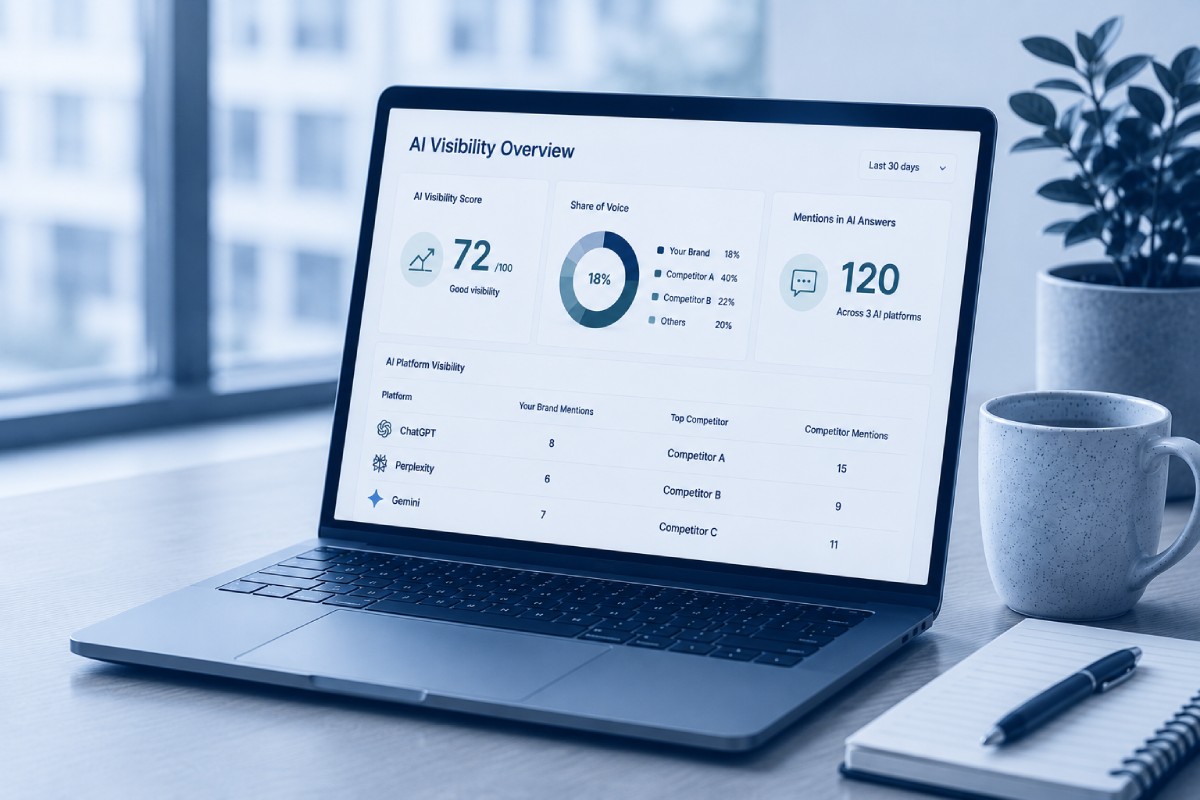
In April 2026, HubSpot launched a dedicated AEO product built from its acquisition of a company called XFunnel. The tool runs daily prompts against ChatGPT, Gemini, and Perplexity, tracks how a brand shows up in the answers, shows which competitors are getting mentioned instead, and tells marketers exactly what to fix. HubSpot’s own AEO guide walks through how the product works in more detail if you want to dig in further.
Here’s the part worth sitting with. Before HubSpot ever charged a customer a dollar for this, it ran the strategy on itself. The result: HubSpot grew its own AI sourced leads by 1,850 percent. Only after seeing those results internally did they turn the approach into a $50-per-month product that anyone can access—no plan required.
That’s a meaningfully different story than a vendor claiming their tool works. Early customers are backing it up too. Docebo, an enterprise learning platform, now gets close to 15 percent of its leads from AI traffic. Beta users who prioritized answer engines saw AI referral traffic grow 20 percent compared to companies that didn’t, at a time when organic traffic across HubSpot’s broader customer base fell 27 percent year over year. In other words, the old channel is shrinking for nearly everyone. The companies pulling ahead are the ones already showing up in the new one.
What “getting cited” actually looks like
It helps to be concrete about what this means in practice. When someone asks ChatGPT or Perplexity a question like “what’s the best HubSpot partner for healthcare companies” or “how do health tech companies handle a Salesforce to HubSpot migration,” the AI doesn’t return ten blue links. It synthesizes an answer, names a handful of sources, and often stops there. The buyer may never visit a website at all. They just remember whichever name the AI said out loud.
That changes what content is actually for. It’s no longer only about ranking; it’s about being the source an AI model trusts enough to name. And that’s determined by things most marketing teams haven’t audited yet, how clearly a page answers a specific question, whether the site has structured data an AI can parse quickly, and whether other credible sources out in the world are already saying the same thing about you.
Where the conversation actually needs to start
None of this means SEO is dead. AEO and SEO share roughly 80 percent overlap in practice. Good structure, real authority, and clear writing still matter exactly as much as they always did. The other 20 percent, how your brand gets cited inside an AI-generated answer rather than just ranked, is the part that’s genuinely new, and it’s the part worth building for now rather than later.
On a recent episode of CMOs Off Script, this was exactly where the conversation landed. Not on whether AEO deserves attention, but on what to actually do about it before doing anything else. Amanda laid out the starting point plainly:
“Start to do that AI audit and assess who’s getting cited… start to look at the data and the results that you can get from that.”
That’s the whole first move, and it’s a deliberately unglamorous one. Not a strategy overhaul, not a new retainer line item. Just going and looking, in more than one model, at who is actually showing up for your category right now.
Your first step, before the next post in this series
Before you plan anything else, run that audit yourself. Open ChatGPT, Perplexity, Gemini, and Claude and ask each one the real questions your buyers ask, not generic industry terms, but the specific comparison and decision stage questions someone types in when they’re actually choosing a vendor. Note who gets named. Note who doesn’t. Note where a competitor shows up in your place.
It costs nothing, it takes about twenty minutes across four tools, and it will tell you more about where you actually stand than any vendor pitch will. As Amanda put it, the goal is to understand exactly where you stand against the field:
“Start to do some research to understand how your site and how your business is stacking up against your competitive set… dive in and go ask the questions you need to understand where you’re stacking up.”
Need help getting started? Download the AEO Audit Template here.
In the next post in this series, we’ll dig into what that audit tends to reveal, and why the content strategy most of us have relied on for the last decade might already be working against us. If you’d rather have a partner run this alongside you, that’s exactly the kind of work our AEO and GEO services are built for.